Back To All Resources
Guides & Reports
Automated Payment Terms Negotiation: Unlocking Working Capital From Tail Spend
May 14, 2026
Read time:
6 min read

May 14, 2026
In most large organizations, tail spend is where working capital opportunity sits and where it gets ignored. Tail spend refers to the volume of unmanaged, lower-value purchases that account for most of an organization's transactions and a significant portion of overall spend. Individual transactions may be smaller in value, but the cumulative impact is substantial.
The problem is not the size of the opportunity. It is the process. Procurement teams have historically been challenged by the cumbersome effort of managing tail suppliers, and the negotiation approach has remained largely unchanged for years. According to KPMG research, 17 to 40% of the value of a vendor's agreement is not realized due to inefficiencies in the contract negotiation process. That gap accumulates across thousands of suppliers, silently.
The supply chains of most organizations have grown ungovernably large. It is not uncommon for firms to work with tens of thousands of suppliers. A widely cited Forbes report notes that a major consumer goods company alone has over 75,000 suppliers, with more than 80% representing tail spend. The true figure is usually unknown; most buyers simply guess at the size of their supplier base.
Category managers focus their negotiation time on strategic suppliers, because the cost of manually negotiating with tail-end vendors typically exceeds the value returned per contract. That math has been correct for a long time. What has changed is the availability of automation and supplier intelligence platforms that reset the equation.
Modern supplier intelligence platforms provide access to millions of vendors, giving procurement the detailed insights needed to understand and control tail spend. When combined with advanced analytics, AI, and automated communication workflows, organizations can now execute thousands of simultaneous payment terms negotiations without expanding the procurement team.
The workflow structures around a ten-step process: analyzing tail spend and benchmarking payment terms, segmenting suppliers by opportunity and probability of acceptance, generating targeted mailing lists, developing pre-approved email templates and FAQ responses, sending initial and follow-up communications, managing responses, escalating exceptions, and documenting agreed terms back into the ERP.
Everything runs through the platform, with full transparency, pre-approved messaging from procurement and legal, and dashboards tracking every email sent, opened, replied, and every term accepted or forwarded to category managers.
A global Fortune 500 enterprise technology company selected Calculum's supplier and payment terms intelligence platform to segment its tail vendors at the end of 2025. The procurement team, together with Calculum, reviewed the smaller tail spend vendors and selected over 900 suppliers to reach out to via email.
Based on the platform segmentation, four supplier groups were defined with customized messaging, payment terms, and negotiation strategies. Calculum created tailored email communication templates and pre-approved responses to frequently asked questions. All communication was approved by procurement and legal within three weeks.
The procurement and Calculum teams built a structured five-month rollout plan with defined goals for payment terms and cash flow across each supplier group. In 2026, the first email was sent, including senior management messaging introducing the company-wide initiative. A second email followed ten days later, customized per supplier with the updated payment terms request.
The initial campaign achieved a substantial improvement of 19 days in payment terms extension across more than 650 suppliers. Within four and a half months, the overall email negotiation campaign yielded a success rate of over 70% in supplier acceptance. Suppliers declining the new terms were escalated to their respective category managers for further review or negotiation.
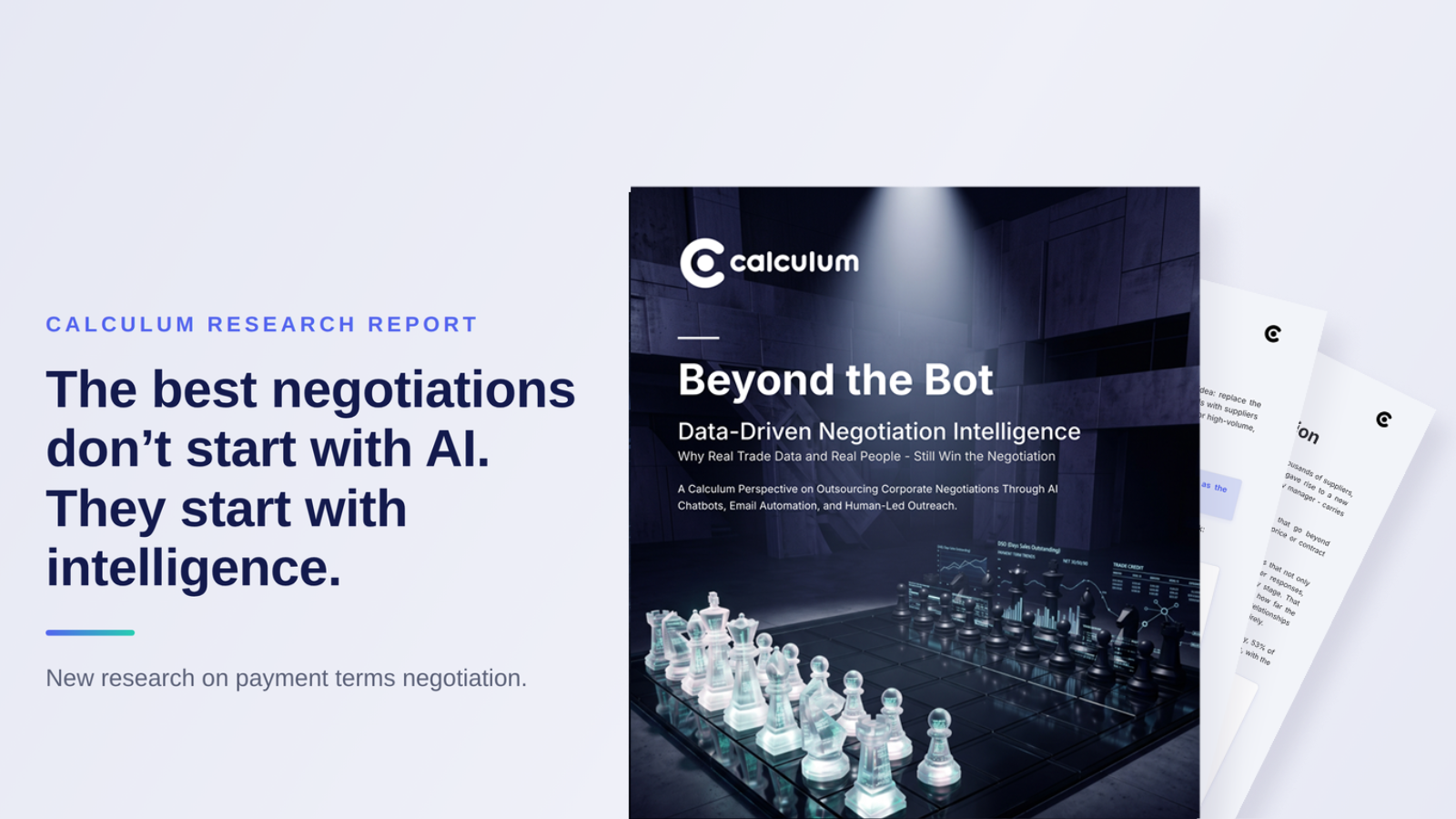
The full report details the ten-step automated negotiation workflow, the six key benefits of outsourcing tail spend negotiation, supplier segmentation strategies for customized messaging, the email communication templates and FAQ frameworks pre-approved by procurement and legal, and the full Fortune 500 case study with metrics and outcomes.
For procurement leaders managing thousands of suppliers, automation is no longer optional. It is the difference between capturing working capital opportunity at scale or leaving it distributed across the tail.