Back To All Resources
The Working Capitalist
The Data Revolution in Working Capital: Why Term Optimization is the First Step
April 20, 2026
Read time:
4 min
April 20, 2026
In our global economy, the physical supply chain has become a marvel of efficiency. We can track a single component from a raw material site in South America to a factory in Asia and finally to a consumer in Europe with pinpoint accuracy. However, the financial supply chain has not kept pace. While goods move at the speed of light, the capital required to produce them often remains trapped in a manual, fragmented system.
The biggest challenge facing modern CFOs and Procurement leaders is the lack of data-driven standards for payment terms. For too long, payment terms have been decided by tradition or by anecdotes rather than market intelligence. This inconsistency creates a massive liquidity gap. When payment terms are not optimized, companies essentially provide interest-free loans to their supply chain, draining their own free cash flow and limiting their ability to reinvest in growth.
To solve this, we must understand the relationship between three distinct layers of the supply chain:
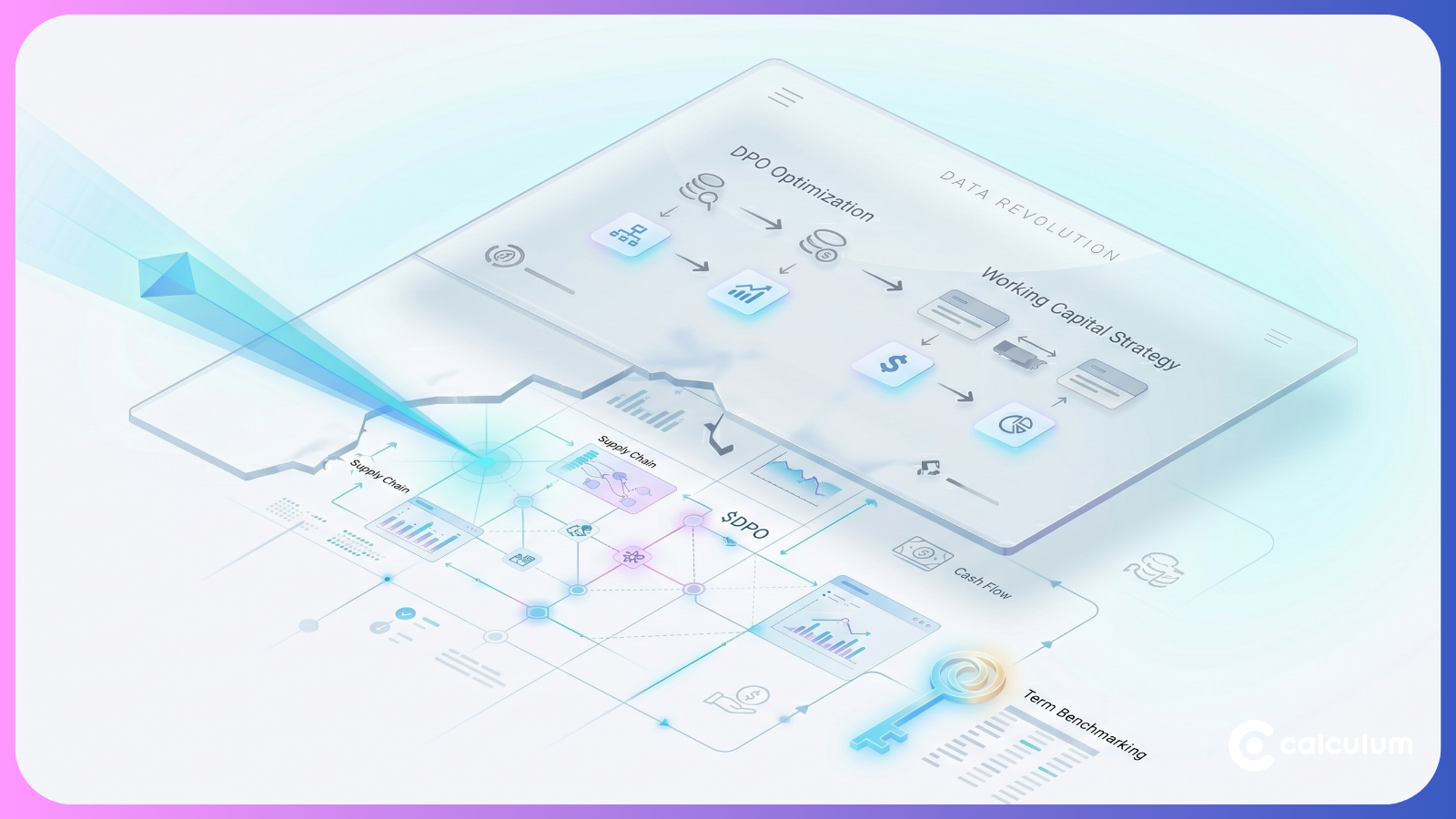
Supply Chain Finance (SCF) leverages the Information Layer to optimize the Financial Layer. It is essentially the management of financial flows and data across the entire network. When a "trigger" occurs in the physical chain, usually the approval of an invoice connected to goods or services, it should immediately unlock a financial action.
The concept of optimizing cash flow is not new. In ancient Mesopotamia, merchants used promissory notes and early forms of factoring to ensure trade could continue while waiting for payments. In the 14th century, the wool trade in England relied on factors to extend credit. By the Industrial Revolution, the focus shifted toward credit risk and helping businesses keep their cash flow moving.
Today, we are in the next stage of this evolution. We have moved from the manual "Confirming" practices of the 1980s to a world where AI and big data dictate financial strategy. While Enterprise Resource Planning (ERP) systems in the 1990s gave us data, we have only recently developed the tools to actually interpret that data for competitive advantage.
The most important shift in the last decade is the realization that you cannot optimize what you do not benchmark. This is where Calculum transforms the process. Rather than approaching every supplier with blanket terms, Calculum allows a corporation to use AI-driven insights to compare current payment terms against real-world market benchmarks.
True Supply Chain Finance is more than just a bank program or a line of credit; it is a holistic strategy. By starting with the data provided by Calculum, a company can reclaim trapped liquidity and improve its Days Payable Outstanding (DPO).
The goal is to align the financial supply chain with the physical one. When you optimize your terms, you are not just delaying a payment. You are strategically managing your liquidity to ensure your organization has the cash it needs to innovate, expand, and lead your industry.
.png)

.png)